What Notepad Glue Works Best for Industrial Pad Book Lines?
January 28, 2026
Selecting notepad glue for industrial pad book lines directly affects tear-off performance, achievable line speed, equipment reliabilit...


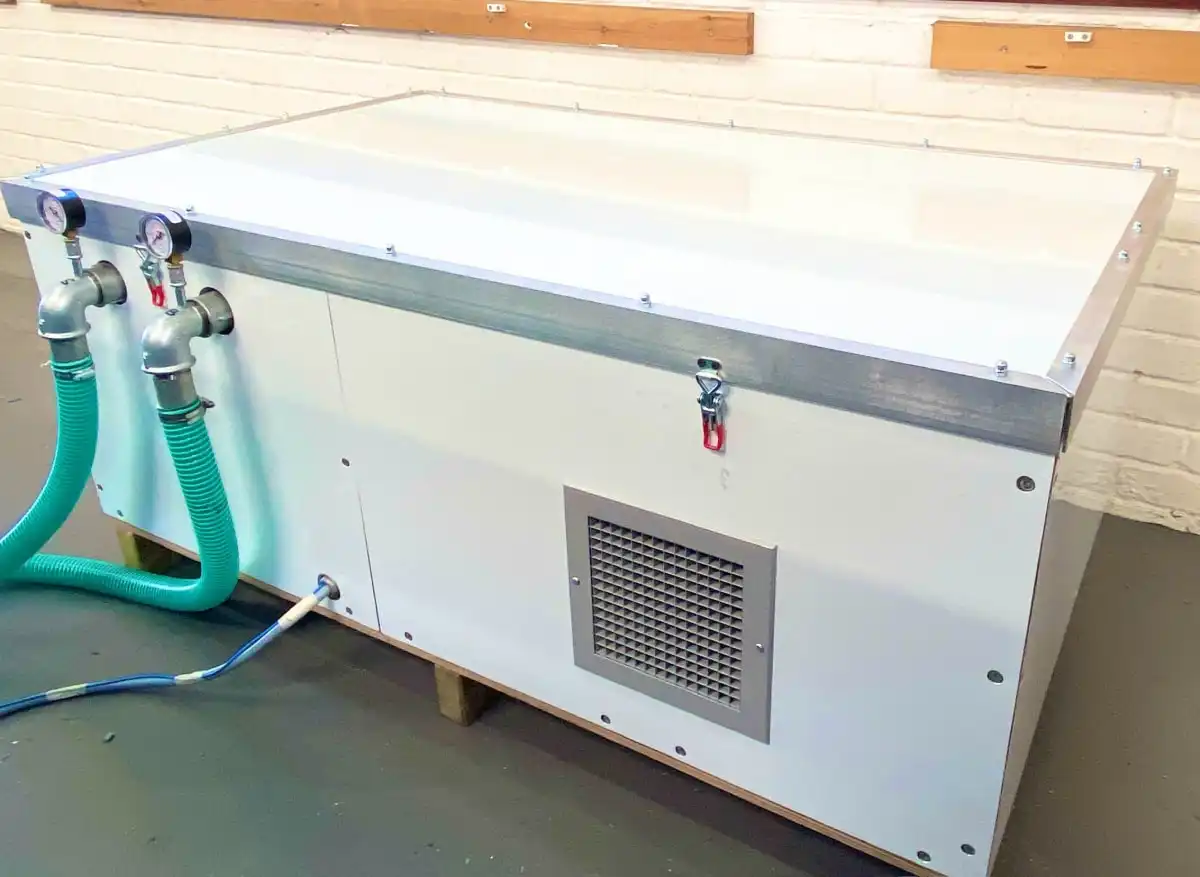
Noise regulations at work for collators in the UK are defined by the Control of Noise at Work Regulations 2005. These regulations set legally binding exposure limits and require employers to assess occupational noise and implement appropriate controls to protect employees from hearing damage.
In print finishing environments, collators and associated vacuum pump systems often operate continuously across production shifts. Sustained operation can increase cumulative noise exposure, particularly as workloads rise or machinery performance changes over time. As a result, employers frequently look to engineering controls such as soundproof pump hood covers to reduce vacuum pump noise at source while maintaining production efficiency.
This article explains the legal noise limits that apply to collating operations, why collators and vacuum pumps are frequently assessed, and how proportionate engineering controls can be used to manage noise exposure in line with UK regulations without disrupting production.
According to HSE, The Control of Noise at Work Regulations 2005 apply across industry sectors in Great Britain and came into force on 6 April 2006, with the music and entertainment sectors following on 6 April 2008 [1]. The regulations were introduced to protect workers’ hearing from excessive occupational noise that can lead to permanent hearing loss and tinnitus.
These regulations replaced the Noise at Work Regulations 1989 and strengthened employer duties by requiring action at lower exposure levels than previously applied.
The emphasis shifted towards:
In print manufacturing environments, the noise regulations apply to employees exposed to noise during production, setup, and maintenance activities. They do not apply to members of the public or to low-level nuisance noise that poses no risk of hearing damage, which is an important distinction when defining compliance responsibilities within operational settings.
The Control of Noise at Work Regulations 2005 set enforceable exposure action values and exposure limit values for daily or weekly personal noise exposure. These limits apply where machinery noise accumulates across a working shift and are intended to prevent harmful occupational noise exposure.
Regulation 4 defines thresholds based on average exposure, measured in dB(A), and peak sound pressure, measured in dB(C) [2]. Weekly exposure may be used where daily levels vary. Hearing protection is considered only when assessing exposure limit values, not action values.
In collating environments, sustained operation of collators and vacuum pumps can raise exposure levels over a full shift. Noise control measures should be based on measured exposure and prioritise reduction at the source, where reasonably practicable.
Collators and vacuum pump systems are frequently identified during workplace noise assessments because they operate continuously during production. Vacuum pumps contribute a steady background noise that accumulates over time, increasing overall exposure across a working shift.
During noise assessments, exposure from collators and vacuum pump systems is typically measured using personal dosimetry or fixed monitoring to establish daily or weekly averages. When multiple machines operate simultaneously, combined exposure levels are assessed against regulatory thresholds, particularly in areas with limited acoustic containment.
Where noise assessments identify vacuum pump systems as a dominant contributor to exposure, controls that reduce noise at source are commonly prioritised, as they provide consistent exposure reduction without reliance on behavioural measures or personal protective equipment.
Acoustic enclosures can provide practical compliance benefits, including:
Prolonged exposure to noise from collators, vacuum pumps, and related equipment presents a recognised risk to employee health. Where exposure regularly exceeds the upper action value, HSE notes that employers are required to implement health surveillance, including hearing checks, in addition to maintaining effective noise control measures [3].
Health surveillance records form part of an employer’s compliance evidence and are used to identify early signs of hearing damage. Where deterioration is identified, employers may be required to review existing controls and demonstrate that they have considered further reasonably practicable measures.
From a regulatory perspective, unmanaged noise exposure can lead to enforcement action where risk assessments are incomplete, controls are not proportionate to measured exposure, or review processes are lacking. Elevated noise levels may also affect print production by reducing verbal communication during setup, adjustment, and fault-finding activities on the shopfloor.
Managing noise regulations at work in a print manufacturing environment requires clear evidence that exposure has been assessed and that proportionate controls are in place. Where assessments indicate rising exposure or inspection readiness is a priority, employers must be able to demonstrate that noise control measures are appropriate, maintained, and reviewed.
Col-Tec supports print manufacturers with engineering-led noise-control solutions designed for continuous-production environments. Soundproof pump hood covers address vacuum pump noise at source and can be integrated alongside service support and bespoke engineering.
Call +44 (0) 1425 627755 or arrange a consultation to review your shopfloor noise exposure and identify practical control measures.
[1] Health and Safety Executive (HSE), “The Control of Noise at Work Regulations 2005”: https://www.hse.gov.uk/noise/regulations.htm
[2] GOV.UK, Legislation, “Regulation 4”: https://www.legislation.gov.uk/uksi/2005/1643/data.pdf
[3] Health and Safety Executive (HSE), “employers are required to implement health surveillance”: https://www.hse.gov.uk/noise/employers.htm
Recent Posts